
To make money in Probably Stolen without losing the shop, cover the next rent payment first and only then spend on stock or upgrades. Split your cash into three pots: a rent reserve, money to replace the stock you sell, and optional upgrades. Judge every deal by real profit, meaning the sale price minus what you paid, the inputs you used and your recurring upkeep. If the next payment is not covered, stop expanding and turn existing inventory into cash.
At a glance
| Core pressure | Rising rent (official store description) |
|---|---|
| First priority | Cover the next rent payment before expanding |
| Profit means | Sale price minus purchase, inputs and upkeep |
| Rent amount | Varies by scenario, difficulty and perks; check your calendar |
| Long-term goal | Buy out the shop (1.0 ending) |
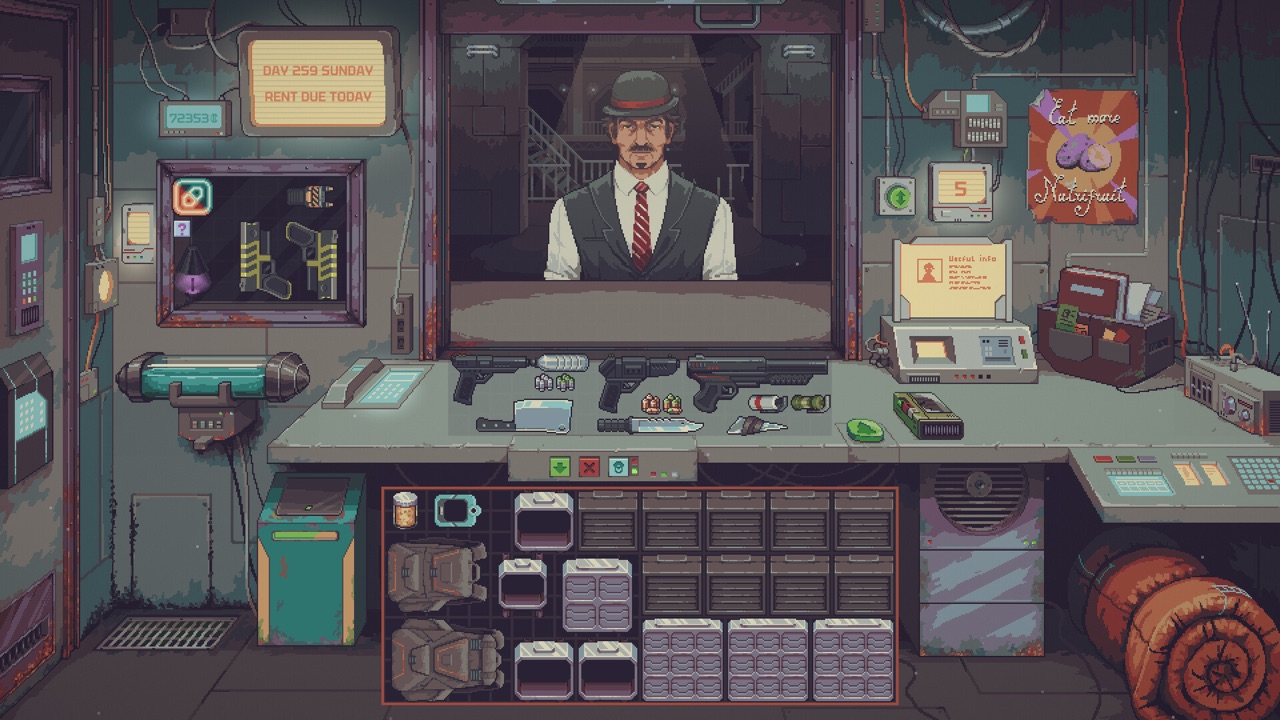
Why rent is the pressure in every run
The official store description sums up the goal: earn enough to buy out your shop before rising rent forces your hand. Every system in the game, from appraisal to production, feeds back into that one question. A profitable week means little if you cannot pay the next bill.
Rent is not a single fixed number across all runs. Community references note that the payment schedule depends on your starting scenario and conditions, and the developer adds four difficulty options in 1.0. Perks can change the pressure as well. Always read the calendar and lease in your own save rather than copying a figure from someone else's run.
Revenue is not profit
A sale price is only half the calculation. Subtract what you paid for the item, any production inputs such as containers or consumables, and the running costs of the machines involved. What remains is the money you can actually reinvest.
This matters most for production. A product with a high sale value can still lose money if its inputs and power cost more than expected. Compare production profit after consumables, not the headline price on the shelf.
Build a reserve before you build a business
Start each in-game week by setting aside the next rent payment. Treat that reserve as untouchable unless you are in an emergency. Then fund replacement stock so the shop can keep trading.
Only money left after those two pots should go on upgrades. This order sounds slow, but it prevents the most common failure: spending on a new machine and then missing a payment. The routine is our editorial advice built on the documented systems, not a guaranteed winning strategy.
Restock what you can identify
Stock you can identify accurately is safer than stock you merely hope is valuable. Appraisal mistakes cost money twice: you overpay, and then you cannot sell the item at the price you planned. Lean on the in-game guides and inspection tools before you commit.
Reliable sellers matter as much as high margins. Goods that move quickly keep cash flowing toward the next payment. Our plasma cartridge guide and Immunivax guide show how detailed those checks can get.
Customers, bargaining and reputation
Update 049 adjusted how bargaining affects customer budgets. It also changed how buy-side and sell-side bargains count, so a bargain in one direction no longer affects reputation gains in the other. The bargain panel now shows a per-direction reputation multiplier.
That makes negotiation a trade-off between margin and standing with groups on the station. Reputation affects encounters and services, so a squeezed profit today can cost you later. The station factions guide explains the six reputation tracks.
Water and production as income
Many players use water as their first steady income. The workflow is to obtain water, test it, treat the contamination you find and label the product by its measured quality. Containers, electricity and treatment consumables all belong in the cost side of the calculation.
Update 049 also clarified how water is valued. Water containers count as water goods only while they hold liquid, and as household goods when empty. Market events now reprice both the liquid and the container. See how to make water for the full process.
Recovering from a shortfall
If the next payment is not covered, stop buying upgrades immediately. Convert stock you already own into cash, prioritising items you can sell quickly at a fair price. Avoid risky deals made out of desperation, because a bad appraisal can deepen the hole.
Once the payment is safe, rebuild the reserve before returning to expansion. Watching a Hardcore run like the one in the videos below can show how tight this gets. Remember that Hardcore and Demo playtest rules differ from a standard run.
Perks that change the numbers
Starting perks can shift your economy in both directions. In Update 049, the developer raised the trading penalty for addiction perks from 5% to 8%. Players with those perks now start with one related item, and withdrawal begins immediately.
Other perks were buffed in the same patch. Model Citizen's credit bonus for reporting criminal customers rose from 20% to 50%, and Intimidating became cheaper and stronger. Check your perk tooltips in your own build, since 1.0 adds new starting perks.
The long game: buying the shop
In version 1.0, buying and owning the store becomes the game's ending, followed by a stats screen with figures such as your most profitable sale and days survived. Every reserve you build is a step toward that goal. The exact purchase price and trigger in the release build still need checking after launch.
Our buy-the-store guide explains what is confirmed so far. Until then, steady profit and a protected rent reserve are the best preparation you can make.
Common questions
How do I pay rent in Probably Stolen? Keep enough cash for the next payment shown on your calendar. Set it aside before you buy stock or upgrades.
How much is rent? It depends on your scenario, difficulty and perks. Check the lease and calendar in your own run.
What is the fastest way to make money? We do not publish a guaranteed route. Reliable trading of items you can identify, plus one well-run production system, is the safest approach.
Quick budgeting checklist
Before you end each day, run through a short list. Is the next rent payment already set aside? Do you have enough cash to replace what sold today?
Then look at upgrades. Does the new machine pay for its inputs and upkeep, not just its sale value? If any answer is no, wait a day and sell down stock first.
Community videos
We summarise these videos from their titles and descriptions only. They play here on this page.
Sources and further reading
- Official Steam store page
- Developer announcement: Opening October 28 (1.0 preview)
- Developer patch notes: Update 049
- Money and rent guide (community)
- Shop and rent systems (community)